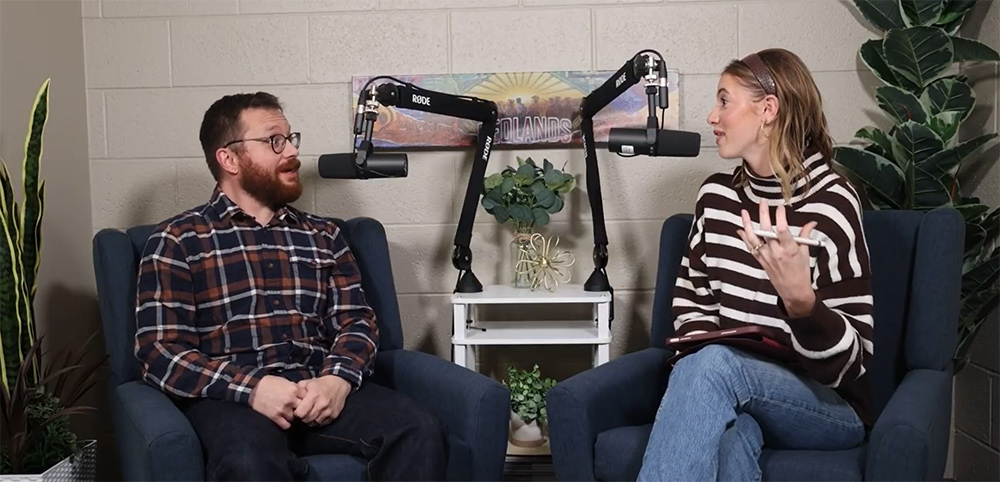
Watch this episode
Transcript
Macey
Hey everyone, welcome back to Redlands Rundown, your official podcast of Redlands
Community College, where we are committed to helping our students find success with
their career, college and everything in between. Really excited about today's episode.
I have Ken Thompson with me today. Ken, I'll let you introduce yourself to our listeners
and tell them just a little bit about your backstory and who you are.
Ken
Okay. Yeah, I'm Ken Thompson. I'm currently a nursing student here. Redlands. Obviously
a nontraditional student. I have had a big career in teaching, over a decade of teaching
before this. So big, big change, as I guess, what we're going to talk about.
Macey
Yeah, I'm really excited because I think a lot of our listeners will be able to relate
to, you know, your story and you know, some of those feelings that you had. And I'm
hopeful that, you know, might give some of our listeners the courage if they might
be thinking about making a change to just go ahead and do it and, you know, talk to
you or our staff and faculty about making that decision.
Macey
So, very excited for the conversation. And first of all, I wanna say thank you for
being willing to share your story, too. [Yeah. For sure.] So I want to start off so
you talked about working in teaching. You have an advanced degree in English, correct?
Ken
Yes, ma'am. Sorry. I have an associate's, a bachelor's and master's degree. All in
English.
Macey
Sure. Yeah, that's what I was thinking. So I want you to talk a little bit about what
led you to studying English and going kinda into that that area.
Ken
Yeah, I actually, I mean, I have a kind of extreme diction and large vocabulary and
all that stuff that I worked on, over years. But I came from a working class, blue
collar family--oil and gas, you know, economy, just like Oklahoma. I came from Wyoming.
But it was basically you had agriculture, you could work at the prison, or you could
work in the oil fields. And I did that for a little bit. I had a pretty good job.
I was making, good money, but I hated it. It was really dangerous. And I looked around
at the people, you know, you'd have a person that was 40 years old and they call him
grandpa because he could barely move. And I knew that wasn't for me. Had some other
friends that were, were going to college as well. And so I went to a community college
like Redlands. And then English was actually my worst subject.
Macey
Interesting.
Ken
Yeah. And, and it, it became this kind of irony where I actually had to work at it.
And it was kind of a challenge. And I worked at it so much, I got a tutoring job,
and then it one thing led to the next. I had a degree in English, from that community
college. [And that's all.] And then I loved it by that point.
Macey
Okay. Yeah. So whenever you got done with your associates and you got, you know, to
your bachelor's and master's, what were you thinking your career was going to look
like at that point? What did you have in mind?
Ken
Oh yeah, I was I knew I was gonna be a teacher. Okay. It's a really weird thing. I
was a distinguished graduate from my high school. You know, that valedictorian thing
like that, and everybody's like, oh, I'm gonna be a, you know, a doctor. I'm going
to be an engineer. And I wanted to be a high school teacher. I kind of said it as
a joke, kind of to make my dad mad. But, yeah, I saw myself as, a teacher. I loved
the tutoring. And then when I was getting my bachelor's degree, I decided, okay, you
know, I'm just gonna go for it, and I'm going to be a professor. That was my, my big
dream, I guess. [Yeah] that's to be a tenured professor.
Macey
Yeah. That's awesome. Yeah, that's cool how things just change and snowball and.
Ken
Yeah, I know. Yeah. And I got, I got a, a state university job for I did about four
years before come down here. Okay. Yeah.
Macey
Cool. That's awesome. So what, what are your favorite parts of teaching or what, what
parts of teaching do you enjoy the most?
Ken
I like their, several things. I'm hyper neurodivergent. So I collect, learning and
skills and people, and I like that, even if I was teaching the same book, like Beowulf
or, you know, Paradise Lost or some big Shakespeare play, I could pick and choose
and make every day different so I could teach a book for four years, but I can make
each time I taught it completely different. Right. Different parts of that book, different
people and things like that. And I just love people. I, I dislike a lot of people
in the mass-
Macey
Sure.
Ken
-sence, but individuals, I loved making those connections. I, I still have, like my
very first batch of honors students at the University of Wyoming that I taught. I
still get contacted, and I just got a wedding invite. Yeah, last month.
Macey
That's cool.
Ken
So, yeah, I like making those, personal connections.
Macey
Yeah. That's awesome. So just to clarify, you are, are you currently still teaching?
While...?
Ken
Yeah, I', just an adjunct now. [Okay.] So I teach for OCCC. [Okay. Gotcha.] All online
stuff. Yeah. Up until last year, I was at a high school. [Okay.] In Kingfisher.
Macey
Yeah. So some of it is still juggling? [Yeah, exactly.] Okay. A family word. Yeah,
yeah.
Ken
Okay. Yeah. A lot of late nights.
Macey
Yeah, yeah. Awesome. Okay, so, I want to move on now to talking about, you know, when
you kind of had that self realization that you were ready for a change, you know,
and like you mentioned, with your career and getting into your career in English,
changes kind of build over time and start to add up. So I want you to talk about when
you maybe have that first itch of, you know, moving out of teaching or when that might
not be the long term fit for you. Can you tell us a little bit about that?
Ken
Yeah, yeah. And I want to say first off that I, I don't see myself as ever not being
a teacher. I'll come back to it eventually. Probably. But yeah, it was a really slow
build. And I, I think that that's one of the reasons why I was okay with being on
this podcast is there aren't a whole lot of resources here in America that basically
encourage you to not have a plan for a little bit. Does that make sense?
Macey
It does, it makes a lot of sense.
Ken
I had this plan right, a very Type-A.
Macey
Yeah. You realize that that's what you have a plan and know what's going to happen
for the next week, month, whatever.
Ken
Yeah. And I wanted to destroy it. And then I got there and then it wasn't exactly
what I wanted or didn't support what I wanted anymore. I changed, you know, me now
I'm almost 40. When I was 23, I had very different life goals and, very different
lifestyle I wanted to follow. Now I have kids, and a wife and a dog and a house to
take care of that sort of stuff. So, Yeah, the first big thing that told me I didn't
want to be the professor was, I mean, you look at every every college in the United
States, and it's being underfunded. The resources are going different places, that
sort of stuff. So I kind of saw the writing on the wall. I didn't want a PhD anymore.
And so I was like, okay, I'm good with the master's. That's enough of the graduate
work that I need. So I knew that I needed to make a change there. And so I took a
job at SWOSU and eventually at the high school in Kingfisher. And even then, it still
wasn't quite, in terms of, like, support where the industry was going. And plus, I
was just getting really burnt out. I had 4 or 5 years there at the high school. I
had over 120 students.
Macey
Yeah. And every what?
Ken
Every day. And I was in charge of committees and I was head of department, and, just
the workload was insane. Of course, the cliche is that, you know, my my students were
making more money than I was at Braum's, you know, and so, yeah, it was a thing. Right?
Held on as long as I could. I knew I needed to make a change. But it took several
years for me to, to finally be like, 'Okay. I'm going to change who I am in addition
to my career.'
Macey
Yeah. And I think I think your point of talking about, you know, where you're at now,
relative to where you were at, you know, early 20s and how that changes. That's something
that I kind of relate to you a little bit on, you know, talking about that and how
and I think as you get older, you have a better idea of, you know, what's what's your
values, what do you what do you want to do? And I think it's crazy that students at
18 are expected to know what we want to do for the rest of our lives.
Ken
And everybody talks to them that way. Right? Like, what's your major? What are you
going to do? It's like.
Macey
Yeah.
Ken
I got my, it's so crazy, I got my professor job, professor, I wasn't like full tenure
or anything, for those people that care. But I got my first really great job because
I was a contractor and I did a deck, right. Like, yeah, I wasn't even aware that that
job was going to be available when I was doing other work that eventually led me to
be a, a name that somebody in a committee write files where. Yeah. So I was in my
early 20s just doing my thing.
Macey
Yeah. You never know when you're in a job interview. Yeah.
Ken
Life's always an interview. It's always an interview, but. Yeah. And then, yeah, you
progress. I accomplished some things that I wanted to accomplish and and maybe didn't
accomplish everything that I wanted to, but I realized that that didn't matter as
much as, like, waking up with my five-year-old [Yeah.] this morning. Yeah.
Macey
Yeah, for sure. And I think, so not change the subject, but I'm in school too right
now. Actually, it's, Yes. This semester I was in a leadership class and we read a
book called "Becoming You" by Suzy Welsch. And for anybody that's feeling these kinds
of emotions or, not sure of, like, what, you know, their passion or perfect job might
be, I think that that was a really great book. We did a lot of exploration on our,
you know, your own values and aptitudes. And by the end of the book, you were supposed
to kind of add that all up to come to an area of transcendence, which was supposed
to add all those things to help find a career for you or a good fit. And so I thought
that was really interesting. But one thing I took away is as you grow and get older,
your values and those things change. So it's okay that your career paths and what's
the best fit for you might also change you know, that's not a, I don't know my identity
or, you know, because I can start to spiral without a doubt. Yeah. And so I thought
that was a great that, that's a great book.
Ken
So I still spiral. Oh, yeah. That's it. Yeah. Yeah. That reminds me of, a book that
I read on a lot, Viktor Frankl, if you've ever heard of him, he survived the Holocaust,
guy was, basically changed psychology. Man's search for meaning is a similar thing
where I, where where he he basically states like, okay, there's some things that we
consider us and our job and our family or other stuff. We can change it. Outside forces
can change it, but there's got to be something that you kind of, your values and what
you care about, what you believe in that can kind of pushes through those difficult
times. Yeah.
Macey
That's got an odd paradigm of-
Ken
What are you going to school for?
Macey
For, oh, I'm doing my MBA. Oh I so yeah. That's. Yeah. Cool. So both of us I have
I have my master's in meat science actually. So we're both kind of like shaking things,
right. Yeah.
Ken
Very different.
Macey
Awesome. So, I want to move on to the actual new direction. And I know that making
that decision to change directions after having you know, several degrees like you
do can feel intimidating and almost in a sense, like feel like you're starting from
square one. So I want you to talk about what led you to nursing specifically.
Ken
Yeah, yeah. There was a lot. It was a confluence of things. When I look back, it's
like, oh, yeah, duh. Like, how did I not for so long? But yeah, it was one of those
things where it felt almost embarrassing, to have to realize that I made choices in
my life that led me to a spot where I was unhappy. Right? Or that I made a mistake
or something like that. Because that's the way that a lot of people talk about it.
There were a couple of things that that really, really helped me. And looking back,
I always respected people in health care in the same way that I respect people like
in the military or, or other careers like that, that I, teaching, asked people to
kind of go beyond, above and beyond and be really professional. Yeah. My students
were actually part of the thing that helped me, kind of feel like not only is this
an option for me, but that I have an aptitude for it. I was tutoring my students in
my English classes on their anatomy. I was giving them my devices, you know, memory
tricks for, their chemistry and other things like that. I was like, oh, yeah, I remember
a lot of this. I actually didn't hate it as much as I think I thought I did. Now that
I'm an adult and I could see the use for that sort of stuff. And then, yeah, I have
a I had an aunt who became a mentor of mine. She went back to school, and she's a
PA now.
Macey
Okay. Well, awesome.
Ken
Yeah. Oh, yeah. She's great. She's crazy, but I saw, okay, if she can go back to school
and she's even older than I am, you know, with all these challenges that she's facing.
Okay, maybe I can do it too. She and she's been a great help.
Macey
That's nice. I think that's I was going to ask if there was a specific person or experience
that that helped, you know, push you over the edge. Yeah. It's great when you have
somebody close of kind of a mentor to you, you know, gives you that confidence. I
can do that, too. Yeah.
Ken
And if I'm thinking one moment where I was like, okay, this is happening, my daughter
being born was a big one. We had the head nurse in that room. You know, anything that
came up, any issue, she knew what to do. She was such a huge help. And then she was
really like, she was emotionally intelligent as well. And so she knew what, Oh, it
was so crazy to see. Not only does she know what to do and you know, she's getting
the work done, but she was able to connect with every single one of us in this really,
really stressful situation. I was like, okay, that's that's awesome. Yeah, I see myself
doing that.
Macey
Yeah, for sure. I can see you. Yeah. [Yes, I appreciate it.] But the interactions
that I've had with you, your emotional intelligence is high. So as you know, any patient
that you had would be, I think happy to to work with you.
Ken
We hope that's half the battle.
Macey
So another question that I have kind of going off of that: Did you ever have any pressure
to just kind of stick it out or that feeling of this is safe? I'll just I'll just
stay here. Oh, man. You know, stay in teaching.
Ken
Yeah. Immense pressure. Both. Just finances. Right. [Sure.] The realities of the world
and having a family and a house mortgage, all that stuff. I had worked, you know,
was 11 years of teaching, five at that school. And so I was one of the, I was one
of the most experienced people in that building. So that was part of it, too. You
feel like, especially in teaching, I guess health care's like that, there are, there
are jobs where you, you are doing more than just a job, right? I was part of community
right? I had had several families where know I had their cousins and then brothers
and and I go trick or treating with my kid, and everybody knows my name. And so, yeah,
there's a lot of pressure financially, within the community. I felt like, okay, I'm
letting them down, you know? And then there was a big one where, a lot of us tie our
identity into our job. Right? I wasn't just Ken. I was Mr. Thompson, teacher, master's
degree. Right? All this other stuff. And so, yeah, there was a lot of pressure to,
stick it out. And I did, for as long I could, Yeah, I ended up staying an extra, like,
two years. Yeah. Longer than I probably could have. I could have quit sooner, but
I felt like I needed to just, and I tried to stick it out a little bit longer than
maybe it was healthy even.
Macey
So now that you've made that transition, some of those fears that you had of letting
people down, hopefully that's not been the case. And I will share that. [Yeah] There's
been a lot of support. And now Kingfisher is not too far from El Reno, but one of
the things my husband and I love is the community and the sense of community, so I'm
sure that you've had people rallying behind you.
Ken
So yeah, yeah. And it's it's amazing the people you find that do you end up being
that support for you? Right? Yeah. Awesome community. They're they're both sad but
also not super surprised. Yeah. The way they put it. Yeah. Love the support. And yeah,
after making the decision I was like, oh my goodness, a huge weight off of off of
your shoulders. Right.
Macey
Good. I'm glad I'm glad that those fears did not, you know, weren't the reality.
Ken
Maybe I'll just replaced them with new fears. Like clinicals I don't know. Yes. Yeah.
Macey
Okay. So now I want to talk about your decision to come back to school at Redlands.
And you talked about, you know, being a nontraditional or adult student, which I don't
think a lot of people know that we we do have a lot of nontraditional or adult students.
What, however you want to call that. But, you know, they're an important part of our
student population here at Redlands. So I want you to tell our listeners what that
transition was like for you to come to Redlands, as, you know, an adult student or
nontraditional, whatever you want to call it.
Ken
Yeah. And I'm gonna be honest, if I sound biased, it's because I am now. And I'm ride
or die for, for Redlands and the nursing program here, I-
Macey
That's what we love to hear.
Ken
Yeah, I just I love them so much over there. So Redlands stood out to me. I applied
to every major college, Right? I, have a really great GPA, you know, master's degree.
I, yeah, some would say I well, yeah, Overqualified. So I just basically my plan was
to go to whoever was going to offer me the most money. And as terrible as that is,
but in the process of applying to, you know, OSU, OU, you know, UCO, SWOSU, there
was a very different vibe, especially me being, a nontraditional student. I didn't
care about some of the, the resources that some younger students might really care
about. I cared about, okay, where's my education going to be? Who's my cohort going
to be and how much is going to cost?
Macey
Yeah, which is a big, that's a big factor. Yeah. I mean, everything is so expensive.
Ken
Yeah obviously. But I, I quickly changed just being here on campus, like when I physically
visited the campuses, it is felt so different here at Redlands. And in fact, Macey
is one of the reasons that, I chose Redlands. It's funny, she helped me navigate some
stuff really early on, and people were so personable here. Like, if I had an issue,
people were coming out of their office, introducing themselves and just, like, dropping
whatever they were doing to help me. And I wasn't even, you know, sure. I was going
to go here.
Macey
Yeah.
Ken
And so, yeah, very great vibe, very comforting. And I didn't have the problems, or
that, like, kind of cold distance. I was a distant number. I wasn't just in email,
you know.
Macey
That sort of thing. Yeah. And that's something that I've talked about a lot, is from
my experience as a student at Redlands, because I came here and then went to OSU,
you know, that was very much the experience. I had people really care. And we are
a smaller school, you know, and so there's there's give and takes to, you know, a
community college versus the bigger college. But I agree with with you there's not
that sense of community and family and people really care about each student individually.
So I'm really glad that that was the experience that you had. And that was kind of
the deciding factor.
Ken
Yeah. One hundred percent.
Macey
Awesome. So so now that you have been a student, what kind of support has made the
difference since you made that transition and, and have started as a nursing student?
Ken
At every level? Basically, yeah. There's just the little extra, I know my professors
by their first names, and that doesn't usually happen, especially, you know, in a
rigorous professional degree. I even know the the financial aid.
Macey
Yeah.
Ken
Yeah, I, at every level, basically, it's just a personable place. They know who I
am. They know what I, what I'm working toward. They know my struggles. Yeah, they
it's just a different level of care, that I didn't get at a big state college before.
Macey
Good. Awesome. That's good. So I want to talk about the carryover a little bit. And
one thing I didn't mention that I wanted to is you had commented about having feelings
of embarrassment about the, you know, not figuring this out sooner, which I kind of
wanted to disagree. And I'd say there's no reason for you to feel that way, because
I truly think everything that we experience in life, regardless of if it's that's
a perfect thing for us or not, I think we get a lot of good at everything. Yeah. So
I want you to talk about, you know, what things carried over from your degrees in
English, your teaching background, those experiences? How have those things helped
you, you know, in nursing school and moving into the health care?
Ken
That's a great question. And it's something that I want a lot of people to think about
as they're moving forward. I always joke that if I hadn't have done all of that stuff,
I wouldn't have my wife and daughter. Right? My wife is also a teacher, but we have
such great communication skills that we even if we're, you know, having a disagreement
about something, it never becomes a real argument. It's almost a joke, because we
are just we know our values. We can articulate those values very clearly, and we set
up clear expectations, all that sort of stuff. So the reason I bring that, that all
up is that that's my support system right now. Right? My my personal life is very
strong right now because of all the work I've put in over the years, and being able
to find all that stuff.
Ken
Also, I feel like it's a superpower anymore to be able to read, write and speak well.
What, are you kidding me? I don't need a clanker to do something for me. I hate to
say that that's A.I., but yeah, it's been a huge, asset even just, you know, walking
into a hospital, being a student nurse, I can connect very quickly with, patients,
even if I'm not comfortable with the skills or the medical terminology, the pharmacology,
I'm able to connect in a way and translate some of that stuff in a way that I feel
like a lot of nurses still even nurse for ten years, and you can see that they're
still having to work with that kind of rapport side of it, the, the personal aspects
of it. Yeah. And also just knowing, okay, I had 120 students a year. I graded that
many papers. I can do hard things here. [Yeah, I am capable.] Yeah, yeah I have the
answer. We can, I know I'm confident in being able to do those sorts of things. Okay.
What's a new skill? A lot of carryover would be surprise.
Macey
That's awesome. Yeah. I'm really happy to hear that. And and you mentioned about,
you know, potentially coming back to teaching, I think even as you're working in the
nursing field, I think you'll continue to serve as a teacher even though you don't
have that specific title anymore. You know, informally, you're still. Yeah.
Ken
Yeah. And I feel like in any industry, like you have people that care about other
people. And that's what makes the world go around, right? There's people that are
willing to do the work and then do, I guess, look out for other people around them.
It's awesome. It's community.
Macey
Yeah, yeah, yeah. Awesome. Okay, so I want to talk and I want you to share, you know,
advice or things with students that might be, you know, having similar emotions that
you've had. So if you could talk to students directly that are questioning their major
or wondering if it's too late to potentially change, what would what would you share
with them?
Ken
Yeah, this was really tough. I, I don't really like giving advice generally, because
as we've, we've talked about, it's so hard to know how things are going to work out.
Right. You can do everything right, and the job you may be working toward may not
exist anymore. You don't know what life's going to throw at you, right? The big one,
though, is for me. It just seems like so many people are doing things for reasons
outside of themselves. Does that make sense? Like, yeah, external validation. Be it
what their parents think they should do, ideas of what they, you know, their 16 year
old self thought they should do. And for me, I feel like I have always when I look
back at my most unhappy moments, it was because I was doing something for the wrong
reasons. It could be money or, because I thought, oh, this is what Teacher Ken is
supposed to do now. It's always those moments where I was looking for external validation
instead of looking at, okay, what do I really care about? I found that I don't need
a brand new truck. This one little small thing that I remind myself like, okay, I
don't need a big, nice truck. I'm okay with my 2015 version. And you know, my my 16
year old self would have disagreed with me. Oh, or, you know, my my, 30 year old self
or the disagreed with me with other things, but that external validation if you're
in it because just because you're good at it or just because that's what your parents
told you do or that that's that's the wrong reason. So and that's that sucks. That's
when people crash out later on.
Macey
Yeah. Yeah. It's super easy to fall into that too. I mean, that, that was that specifically
was something that that book that we read this semester "Becoming You" talked about
and Suzy Welch called it 'The Four Horsemen'. And so they oh, yeah, those four things
exactly like you said, you know, financial, you know, stability, going for something
because it pays a lot. We are, though, the easy part, that little checklist. Yeah.
The expectations for pack around you. So yeah it it's very easy to fall into that.
And I'm so glad that you mentioned that because that's something that is hard to do
sometimes, but super important to to stay true to you and really try to find what
you know, makes you happy.
Macey
You know, it's just that's what matters. Yeah.
Ken
Gets exhausting after a while.
Macey
That what if if somebody, could have told you something or something you wish you
would have known? What, What do you wish somebody would have told you earlier in life?
Ken
Yeah, that's a good one. I honestly would be too afraid. Build any paradoxes, right?
I know the time travel thing because I really do? I genuinely think that there's not
much on the whole that I feel like I could change to make things better. The big one
would just be to chill out like everybody has anxiety, right? And I'll leave this
room and immediately have anxiety because I'm going to go talk to my nursing professors
about next semester and the clinical rotation and all that stuff, but I just cared
so, so much and it didn't matter. Like, so much of it didn't matter. So many negative
emotions and stress, anxiety about things I didn't have control over. So it didn't
really matter. And even if it did, me worrying didn't change it. It just made my life
harder. It made it harder for me to lean in on people. So yeah, if there were any
actual things, I would say, just ask for help? Are you the weird one? Right? Be cringe,
talk to people. There were so many times that I, I was struggling and then later they
were like, bro, why didn't you just ask for help? Right? Yeah. But yeah, the big one
would just be like, just chill out on so much of it, care about what you can control,
and then just let the rest and yeah, be. And of course, me being almost 40, I can
say that now, sure, Looking back. But yeah, I'd be the thing that I would tell myself
or, or other people that are navigating difficult times just care about what you have
to care about, but don't beat yourself up as much.
Macey
Yeah, I, I totally agree with that. You couldn't have said that better. So thank you
for sharing that. Okay, before we wrap up my, final section, I have kind of a few
lighter questions for you. Some fun. Some kind of, relative to what you're doing now.
So first question is, do you have a preference? Coffee or energy drinks?
Ken
Coffee.
Macey
Okay. Hot or Iced?
Ken
Hot. Okay. I'm all about the espressos. Like. Yeah, the heavy stuff.
Macey
Okay. My next question is one word to describe nursing school.
Ken
Tachycardia.
Macey
That you're seeing, you know. And then my last question is, what keeps you motivated
on the hard days?
Ken
Oh my goodness. It depends. I have, like, systems of motivation because I can spiral.
For example, I've just got a phrase written on my mirror that I see in the morning.
Every, every day. It says you can do hard things. Hard things are worth doing. And
my students that I still keep in contact with. Yeah.
Ken
I don't want to let those people down, as well. So yeah, big motivation. The intrinsic
part, knowing that I can do hard things. Hard things are worth doing, knowing that
this little moment that I'm, I'm having, it's going to pass. Okay. And I try to play
that, play the tape forward. You know, in two years what day is going to bring future
Ken the better outcome essentially is really hard to do sometimes especially when
I'm tired or or sick or, Yeah, you know, just overwhelmed. But yeah, all that sort
of stuff. I have systems because one isn't enough. Sure.
Macey
How several.
Ken
Yeah. Willpower acting fails pretty quickly.
Macey
Yeah. And I think having having the support system your family, students, you know,
even staff and faculty here and then, you know, having those motivators, things that,
you know, help your, you know, motivate yourself.
Ken
Yeah. Yeah. I already said to the nursing program people over there, they're they're
such great help. Because I can just like, we have Ruby and I literally just text them.
Yeah. And they'll they'll bring me back essentially together.
Macey
Awesome. Well, I just want to say thank you for joining us today and sharing your
story and your experience. I really hope that we have listeners that resonate with
some of the things, or give them the courage to maybe make a change if that's something
that that they're thinking about. And so you get tons of great advice that couldn't
be put better. So, I'm excited for our audience to listen to this. And again, thank
you so much for sharing your story and talking about your experience at Redlands.
And you know how your pathway and your testimony is just, you know, showcases how
it's okay if things change direction and, and you, you know, need to make a change.
Ken
Yeah. I really hope that it helps somebody out there. There wasn't always this much
material, especially when I was making some of those decisions. So I really appreciate
it. And thank you all for having me. And let me share a little bit of it.
Macey
Awesome. Thanks, Ken. Well, thank you guys for joining us today on our episode. Make
sure to subscribe wherever you listen so you don't miss upcoming episodes. And we'll
see you next time. Bye.