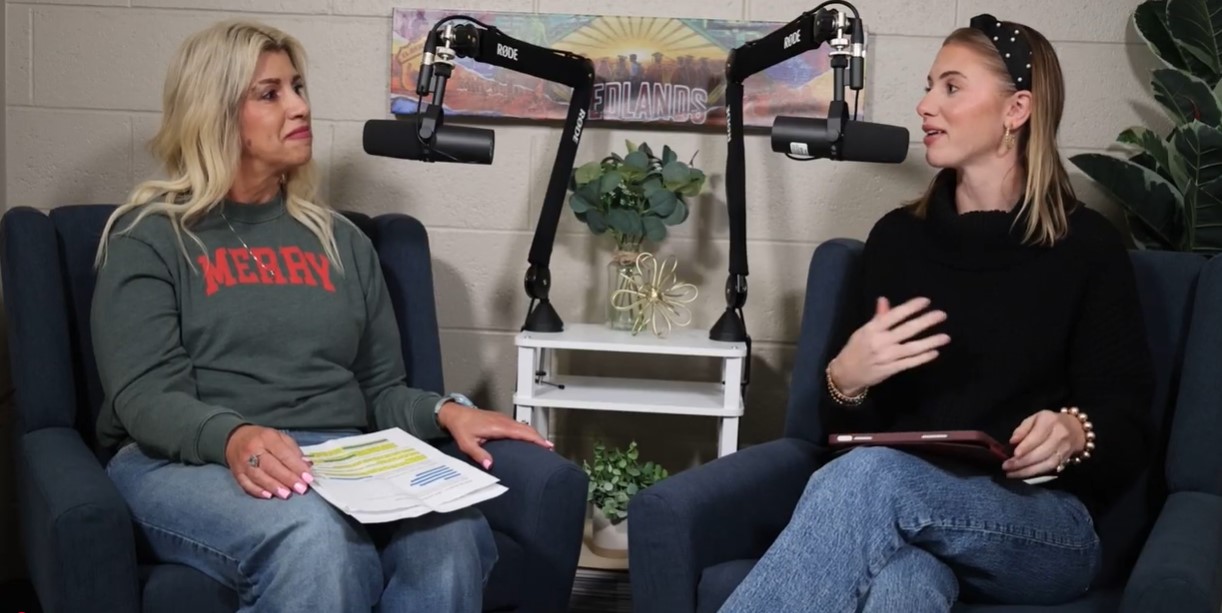
Watch this episode
Transcript
Macey
Hey, everyone. Welcome back to The Redlands Rundown, the official podcast of Redlands
Community College, where we're committed to helping our students find success in the
classroom in their careers, and with everything in between. I'm very excited about
today's episode. It's something that I've kind of had in the back of my mind and wanted
to do, and I thought coming up on Christmas break and everybody getting ready to go
home for a little bit was the perfect time to have Miss Julie Lamb, our student counselor,
join us. So I'm very excited about her.
Julie Lamb
Thank you, so much for having me. I'm looking forward to it.
Macey
So before we dive into any of our topics and the questions I have for you, I just
want you to tell our listeners a little bit about who you are, your role here at Redlands,
and kind of what that looks like for you.
Julie Lamb
I am the student mental health council for Redlands, and I'm available to help students
who may be suffering from anxiety, depression, adjusting the college life and culture.
Really just anything that comes up. And I also connect them to student support providers
in the community. And I would just like to give a shout out to some of those, because
we had the absolute best community partners in the county. Examples include Kennedy
County Coalition for Children and Families, Donna Dyer with Blessing Vasquez, what
an angel, tribal partners, Red Rock behavioral health, just too many to list. But
we have the best partners, and I just wanted to give them a shout out because they're
always available to help our students. Yeah. Anyway, yeah, we do have a really great
community, a lot of support from the people here.
Macey
Yeah. Anyway, yeah, we do have a really great community, a lot of support from the
people here. And it is so awesome. Okay, great. So we this is going to be coming out,
right as we're going into Christmas break. And so really the theme of the episode
is rest and reset. And so to start, I want to talk about the basics and what that
means because it might mean different things to different people. And so from your
perspective, what does that look like?
Julie Lamb
And I always say you just try to bring in some student, perspective because I've written
down some things that they had giving me feedback on. And I love to share that because
it kind of helps you guys realize, oh, someone else thinks like me, you know? So when
we talk about different things, like, you know, resetting and resting and all of that,
I mean, there's different areas. There's mental rest, physical rest, emotional rest.
And so mental students usually just say, I need a brain break, right? Yeah. Or y'all
need that. And physical is just being still, you know, catching up on their sleep
and then emotional may look like just setting boundaries and that kind of thing and,
and protecting their wellbeing.
Macey
Yeah. So from your experience, what are some things that typically our students might
misunderstand about us.
Julie Lamb
That is. Yeah. And I had written some of those things down. But a lot of times even
all of us, not just students, we get caught up in the hustle and bustle of the holiday
season with, you know, just different kinds of demands. One student, told me, and
I wrote down that they get caught up with, like, social activities, we'll call it
that. You know, they get so busy hanging out with their friends that they forget to
truly rest. Yeah. And, so I think that's just so important is to take the time to
do that, to guard our time to reset.
Macey
Yeah. To really be intentional about for sure. And, and I had some questions later
on that I. Yeah, will kind of expand on that, that I wanted to pick your brain about,
but now I want to now that we kind of have a definition and an idea of the different
kinds of resting, you know, physical, emotional, mental health, all those different
ones, I want to talk about how we know, and how we can recognize that we need that.
So, can you talk about some red flags that you see this time of the year so students
can recognize?
Julie Lamb
Well, I usually towards in the semester when things are getting really hectic and
they're getting ready for finals. You know, I see sometimes miss classes, you know,
lacking motivation, relationship issues, that type of thing. So, that's usually a
red flag for me that, you know, okay, it's time for them to, to get a rest.
Macey
And then one thing that I talk about probably more now as I've gotten a little bit
older, is stress and burnout. Can you talk about the difference between those two,
especially how they relate to our students and how they can, you know, determine which
one of those they're having and kind of how to handle that
Julie Lamb
For sure, that's an excellent question because we all have stress and that's normal
can actually motivate us to do our best. You know, but right now it looks different.
I mean, that is when you have chronic long term, ongoing anxiety. And that can actually
be quickly, you know, sometimes it can affect our ability to function or our ability
to just enjoy life in general.
Macey
And that's when we know that we need to reach out for help. Yeah, yeah.
Julie Lamb
So there's and I think it's great that you point out how stress can be a motivator.
You know, a little bit of pressure submarines, it can be uncomfortable, but it can
really be good when you've got big assignments coming up. And yeah this will come
out after finals. But even as our students are getting ready for the spring semester,
to be able to know that little bit of worry and that little bit of stress means that
you care, you know, and it's pushing you to do better.
Macey
Absolutely.
Julie Lamb
Yeah. So and not letting it get to that point. Yeah. As you're getting burnt out by
your reach out for helping.
Macey
Yeah, absolutely. And we never want our, our students to hesitate to reach out. I
mean, we, we care about our students academically, but we also want them to be successful
in life. Yeah. And never be afraid to reach out because we care. There's so many people
in the community available to help. Yeah. And they will.
Julie Lamb
Absolutely. Great. Okay, so now that our students finally get the chance to slow down
and take a break, we got, I don't know how long is our Christmas break? It's that
we were just talking about it several weeks. Several weeks. And so, especially for
our students, they are probably closer to, ultimate. And so I want to talk about what
an actual healthy rest looks like first. Yes. So can you talk about some simple, realistic
ways, that our students can actually implement intentional rest or break.
Julie Lamb
For sure, I think a good idea would be to unplug from social media a little bit, you
know, really kind of monitor that. A lot of people are calling in, you know, can really
take hold in our psyche. So, you know, that that other thing, fresh air exercise,
you know, really just guarding our time, to quiet our thoughts and reset.
Macey
Okay. And then my next question is something that I relate to personally about feeling
guilty about not doing something. It's hard for me to sit and be still and not feel
that, like, I need to do something. And that's when I start to doom scroll. Yeah.
And then I get anxious because I spent three hours on TikTok, so what advice do you
have for our students that feel like they have to be constantly doing something?
Julie Lamb
Right, it is expressed to you because we all, as you mentioned, struggle with it.
But I can tell you this that resting is actively productive because it gives us that
moment to pause and focus on our mental health and that helps us better prepare when
we come back so our focus is going to be sharper, you know, we're going to be able
to to do better in classes if we can just take that time to do it. But we all sometimes
feel guilty in that transition to break is is difficult because I myself, as you mentioned,
you know, takes a couple days to just go, okay, what's my schedule today? Oh, I don't
have a schedule today. And to really embrace that and, and take that time to intentionally
rest, say regroup.
Macey
Yeah. Do you have any activities or small things that you enjoy doing instead? Because
I am I'm guilty of it. Yeah. Oh, and so although true, I almost have to have like
I love crafting and little things like that, even coloring. You know, that seems kind
of silly me and older, but is there anything that you recommend for our students that
maybe struggle with that, that they can do to be intentional?
Julie Lamb
Yeah, I think it's good for them to focus on their hobbies, whatever that they do
for fun. I had a student tell me that, you know, I just want to read a book that's
not assigned. Okay. So something like that. I enjoy the outdoors. So hiking being
out fresh air even if it's cold just for a short amount of time to breathe in a deep
breathing and really just spend time connecting with family, being around those we
love and making memories.
Macey
Yeah. Awesome. I think those are all great practical tips for our students to use
to. And like you said, I think unplugging can be like so helpful, especially for that
noise in our head of everything else in your mind, running a million miles an hour
and actually getting to slow down for a little bit,
Julie Lamb
Just take the time to do it. Not feel bad about it.
Macey
Absolutely. Okay, great. So, now that we've talked about some ways that our students
can really rest and get the intentional about that over break, we know unfortunately,
right does not last forever. We have to get ready for the spring semester. And it
always comes up quicker than sometimes we want it to. But I want to talk about how
our students can reset before coming back. And, so tell me. Sorry. So what are some
things that you would recommend our students be thinking about before January, before
classes start to really prep themselves, to come back and have a good start coming
back?
Julie Lamb
Yeah, I think reflecting on the fall semester, just looking back, say what worked,
what didn't work, what could they do differently to be more successful. Setting small,
achievable goals that they can do, not trying to take on too much at once, and to
also remember to take small breaks during the semester and remember to stop and have
fun during the semester. Don't wait for official breaks.
Macey
Yeah, absolutely. And I, I think it's easy to overload yourself with a lot of different
responsibilities and especially some of our students on campus that are on competitive
teams. And then, you know, they're involved in other extracurriculars. And so, something
that I've always kind of lived by, especially like in my professional career, because
I've went from different industry to different industry and never really thought saw
myself working in higher ed. And I love that is being open to different opportunities.
But I think to your point, also, knowing when it's okay to say no to protect your
time and your energy, so you're giving 100% to what you need.
Julie Lamb
Absolutely true. And just balancing that work, life, school, you know, keep it perspective
so that we can say mentally well throughout the semester.
Macey
Yeah, absolutely. Do you have any tips to make that transition from break into, you
know, really getting back into the swing of things easier? I know that's tough for
a lot of students. Do you have any tips for them there?
Julie Lamb
I would just say what I tell students is try to adjust their schedule a few days before
a semester starts, maybe get up early a couple days before, so they just so they can
get used to getting up and to maybe organize their space. I think that's all work.
Get ready for that. How that's going to look to them. Maybe get a calendar start,
you know scheduling study time and and sorry to look at their syllabus. And you know
she was doing and you know just get an idea and start start getting that mindset transition
back to school.
Macey
Yeah I would agree. And I think sometimes for me the thought of something is more
overwhelming than actually doing it. And so, you know, for our students, especially
those that are enrolled full time, that are taking our 4 or 5 classes, that thought
of working at all the assignments that are coming up might be overwhelming, but it
feels for me, and I'm a physical planner person. And so I have a paper where I write
everything out. It's kind of like, satisfying for me for to get that out of my head
and put it on paper where I don't feel like I have to carry that anymore, and I can
see it. And something that helps me is just taking things one day, one thing at a
time, and not focusing on everything that you have coming up and, and really focusing
on what's my top priority, what do I need to work on first? So I think those are great
tips. Are looking at your syllabus at a time, getting an idea of you know what you
need, prepping, Don't wait till that first day of classes to look at all and get the
books all before. Yeah. Then yeah, before, get the books before if you can. And I
know Sydney and I talked about different ways of planning. She's more of a digital.
I'm more of like a physical planner. So whatever, whatever style works best for our
students. But I think as long as you have something. So that really helps.
Julie Lamb
Yeah. For sure. Yeah.
Macey
Okay, so I want to talk a little bit more about resources for our students. So obviously
your resource for our students on campus, how can our students reach out to you? Get
in touch with usual.
Julie Lamb
Sure. So even though classes won't start till I believe about the 20th. So we come
back on the sticks that we fit. And, so I will be on campus on the fifth and available
for students at the welcome by email call and also on the break, we have Timely Care,
which is our new free for students online resource for mental health and physical
health. So that, students can go online on canvas there's a link, you can just sign
up. There's a Timely Care app. They can go on a register and they can get six sessions.
I am all about six sessions. Schedule counseling, six sessions, a schedule medical.
I mean, they can go, call and get a doctor's appointment from the patch. I mean, if
you're sick, don't hesitate to reach out because are six free, counseling sessions
a year is six free medical sessions per year. And there's 24-7 talk now. They're just
having, like, a rough day, and they need some of the talk to this is available 24-7
for them and Medical Now also 24-7. If they're just say they're up and they know that
a sinus infection or something, but they really don't have insurance and don't know
a doctor, they can call and get a doctor through timely care and they may be, would
send in a prescription, just do a video. So it's such an amazing resource for our
students. And then there's also health coaching, self-care content. Things that might
be helpful for them over the break to reset and peer community. And lastly basic needs
support if they need a resource in the community. I've uploaded our local resources
for them. They're all available on the Timely Care app as well also. And then, so
there's just no reason for them to reach out if they need some help. Just don't hesitate.
There's someone always.
Macey
Yeah, absolutely. And I think your point of, you know, having a doctor's appointment
from the couch or feeling that I did that when I was in college. And for a lot of
our students here, you know, you might have a family doctor back home and, and if
you're over break, you know, and you might be able to get in and see them. But even
if they're busy and you know, they're home for the holidays, too, having that your
resource and access to medical care while staying at home because nobody wants to
leave the house, per se. And even if you're not sick and you're just not feeling the
best and you need somebody to talk to, like, that's awesome to have that available,
you know right at your fingertips.
Julie Lamb
Yes, such a blessing that we had this resource free for our students. Yeah, it's just
amazing. I hope it can continue. So we want our students to utilize it, please, because
we don't want to, you know, risk losing it if we don't have the utilization. So yeah
we use this free resource students.
Macey
And if they have any questions about accessing...?
Julie Lamb
Yes. So yeah I and I call me, email, drop by. Like I said there's several places on
our website that it's available and you just sign on with, you know, your school email
really is okay.
Macey
Awesome. Is there anything else that you want to share with our students today, before
we wrap up?
Julie Lamb
Just kind of to add though, that your reference, we're not just concerned about academic
success we want our students to do well, you know, physically, emotionally. Yeah.
We have such great partners here. People on campus, they care just walk into any office
that they ever need any help in, that they can't help, I know that they will send
out to a person who can.
Macey
Yeah. Yeah, absolutely. And that's something Sydney and I talked about before is,
you know, Redlands and I think what makes Redlands unique is the culture and the family-like
environment. And you know, professors really care of our students and our staff really
cares about our students. And we are so fortunate to have you support for our students
so that, for our students that are listening, I would very much so encourage you to
reach out, to Miss Lamb, if you need help, you need somebody to talk to, or if you
just want to go in and meet her because she is a wonderful person and I can't recommend
her enough for all of our students to go and visit.
Julie Lamb
I always have cookies and coffee, so come on.
Macey
And she has. You have a sweet set up in your office. It's very comfy in there.
Julie Lamb
That should be welcoming.
Macey
Well, awesome. Okay. Well thank you for joining us today.
Julie Lamb
Thank you so much, I appreciate it.
Macey
Yeah. And thank you guys for listening. Make sure to subscribe wherever you listen.
And we will see you next time. Bye.